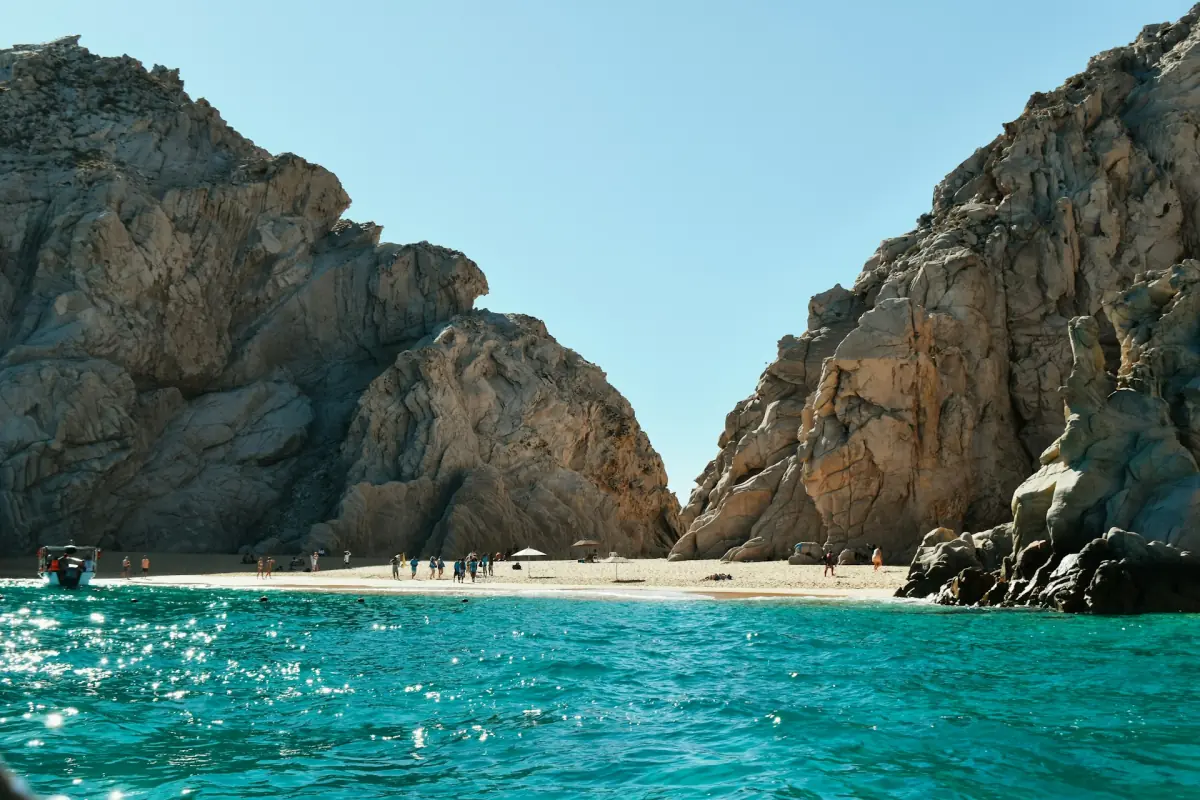
Los Cabos beaches at a glance
Most visitors spend their beach days on the bays of the Tourist Corridor, the coast between San José del Cabo and Cabo San Lucas. A few of these bays are known for generally calmer water. That word "generally" matters. Conditions change with swell, wind and rain, and no bay is open for swimming every day of the year.
The local beach flag is the rule that counts on the day. A Blue Flag award says something about the management of a beach, not about the sea on your visit. If your plans hinge on the water, keep a backup such as a morning on the water with one of the Los Cabos whale watching tours in season, or an afternoon in San José del Cabo.
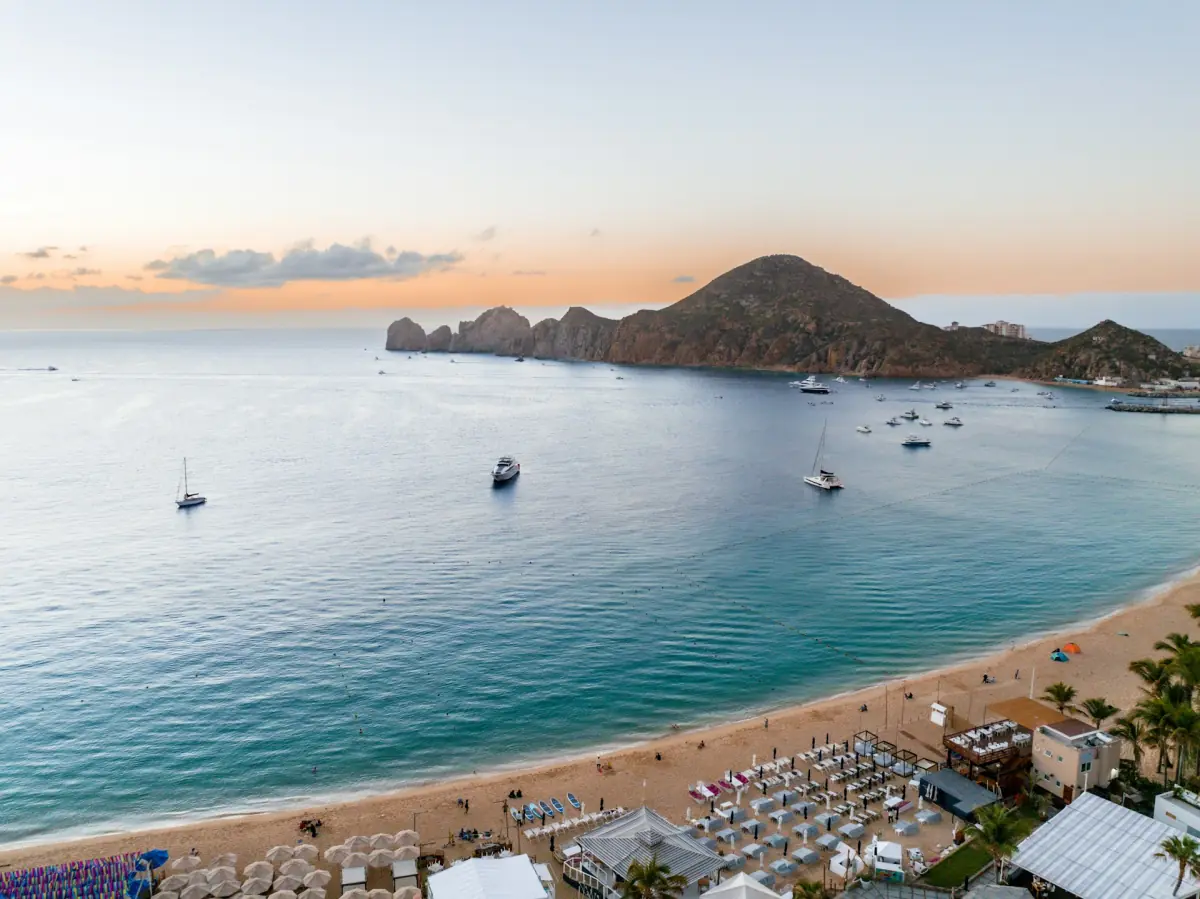
The Tourist Corridor between San José and Cabo
The Corridor is not a town. It is the coastal stretch along the Carretera Transpeninsular, Mexico 1, between San José del Cabo and Cabo San Lucas.
Resorts, golf courses and residential areas line much of this road, and the beaches sit in the bays below. You reach them by car, taxi or a tour transfer, so plan your beach day around transport. The bays differ in shape and exposure, which is why one can be calm while the next has strong surf.
Beaches inside Cabo San Lucas, such as Médano and the sand at Land's End, belong to our sister guide: see beaches in Cabo San Lucas and Lover's Beach.
Our pick: a bay by boat
Some of the calmest water around Cabo is reached by boat, and this cruise brings snorkel time and lunch.
Hand-picked tours, booked through Viator. Prices are indicative starting prices in US dollars (as of October 2026). Tap a tour for live availability and the current price in your currency.
Boat, snorkel and whale trips along the coast
Trips that leave from the marina in Cabo San Lucas or pick you up in San José and on the Corridor.
Chileno, Santa María, Palmilla and Costa Azul
Four names you will hear most often along this coast, and what to expect from each.
Chileno
Chileno is one of the Corridor bays with generally calmer water, and it holds the Blue Flag. Calm is the usual pattern, not a promise: check the flag when you arrive.
Santa María
Santa María is the other Corridor bay with generally calmer water, and it also holds the Blue Flag. It is a common stop for snorkel boats from Cabo San Lucas. Bays can be closed to snorkelling or boats for a period after storms, so confirm the current status with your operator before you book a snorkel trip that names Santa María.
Palmilla
Palmilla, closer to San José del Cabo, is a sheltered bay and holds the Blue Flag. Its position near the river mouth means it can be affected after heavy rain, when plant material and debris wash down to the coast.
Costa Azul
After heavy rain Costa Azul is one of the beaches hit by plant debris and waste near the river mouths, and black flags can go up there. Do not assume Blue Flag status, and do not plan it as a family swimming beach.

Swimming flags in Los Cabos
The colours used at supervised beaches. Lifeguards and posted signs always take priority.
| Flag | Meaning | What to do |
|---|---|---|
| Green | Conditions judged suitable by local staff | Swim near others and stay within your depth |
| Yellow | Caution | Stay close to shore, watch children closely |
| Red | Dangerous conditions | Do not swim |
| Black | Beach fully closed | Stay out of the water |
Red and black flags mean conditions in which the water is not suitable for bathing. There is no "just a quick dip at the edge" under a red flag. For most families, the best plan is a Corridor bay with a green flag in the morning and a non-beach alternative ready for days with red or black flags.
After heavy rain many beaches can fly black flags at once, and flooded arroyos are dangerous to cross. Check local notices after any storm.
Blue Flag beaches in Los Cabos
An international award for how a beach is managed.
El Chileno, Santa María, Palmilla, Acapulquito and Las Viudas are among the certified beaches, out of roughly 25 to 28 in Los Cabos. What matters for your trip: Blue Flag does not replace the flag on the day. A certified beach can still fly red or black after swell or rain.
Public beach access in Mexico
Mexican federal law protects free access to and passage along the beach.
A 2020 amendment to Mexico's federal law confirms free access to and passage along beaches. This is about the beach itself. It does not give you the right to use hotel grounds, private car parks or every private path down to the sand. Look for marked public access points and respect gated areas.
Sea turtles nest on parts of the coast. Keep your distance from nests and hatchlings, do not touch them and do not use flash at night.
More to plan around the beaches
Questions about Los Cabos beaches
Which Los Cabos beaches are calm enough to swim?
Chileno and Santa María on the Corridor have generally calmer water, and Palmilla is a sheltered bay. Whether you can swim on a given day depends on the flag flying at the beach.
Is Costa Azul good for swimming?
Do not plan Costa Azul as a family swimming beach. After rain it is affected by debris near the river mouths. Choose a calmer bay for swimming.
Does a Blue Flag mean the beach is open?
No. Blue Flag is an award for beach management. The local swimming flag on the day decides whether the water is open.
What does a black flag mean?
A black flag means the beach is fully closed to swimming. After heavy rain, black flags can go up across all beaches in the municipality.
Can I walk onto any beach in Los Cabos?
Beaches are public in Mexico and the law protects access and passage. That does not include hotel grounds, private car parks or private paths, so use marked public access points.